
SEO, or Search Engine Optimization, is the process of improving a website so search engines can understand its content and users can discover it in organic search results. For businesses, SEO can increase online visibility, attract relevant visitors, generate leads, and create a stronger long-term presence in search.
If someone searches for “SEO agency in Kenya,” “website design company in Nairobi,” or “best digital marketing services,” search engines decide which pages are most relevant to show. SEO helps us improve our website so it can compete for those relevant searches.
For beginners, SEO can seem complicated because it involves keywords, content, technical optimization, backlinks, search intent, local search, and website performance. However, the core idea is simple:
We create a website that search engines can understand and people can find, navigate, and benefit from.
What Does SEO Stand For?
This guide explains what SEO is, how SEO works, the main types of SEO, keyword research, search intent, technical SEO, local SEO, SEO tools, common mistakes, and how beginners can start.
SEO stands for Search Engine Optimization.
Search Engine Optimization is the practice of improving a website and its content to increase its visibility in organic, unpaid search results.
For example, imagine someone searches Google for:
“SEO services in Kenya.”
Search engines analyze relevant pages and determine which results are most useful for the searcher’s query.
A well-optimized website makes it easier for search engines to understand:
- What the website is about
- What services or products it provides
- Which topics each page covers
- Where the business operates
- Who the content is intended for
- How different pages are connected
SEO can involve:
- Keyword research
- Content optimization
- On-page SEO
- Technical SEO
- Off-page SEO
- Local SEO
- Internal linking
- Link building
- Image optimization
- Website performance
- Mobile optimization
- Search intent
- Structured data
Unlike paid search advertising, organic SEO traffic does not require us to pay for every individual click.
How Does SEO Work?
To understand SEO, we first need to understand how search engines discover, process, and organize web pages.
Three fundamental processes are:
- Crawling
- Indexing
- Ranking
Understanding these three concepts gives us a strong foundation for understanding SEO.
1. Crawling
Crawling is the process search engines use to discover web pages and their content.
Search engines use automated programs commonly known as crawlers, bots, or spiders.
These systems can discover pages through links and other sources.
For example, when we publish a new article and connect it to another page on our website through an internal link, a search engine crawler may follow that link and discover the new article.
Search engines can discover URLs through sources such as:
- Internal links
- External links
- XML sitemaps
- Previously discovered URLs
A technically accessible website makes it easier for search engines to discover its important pages.
2. Indexing
After discovering a page, a search engine can analyze and process its content.
If the page is eligible to be indexed, information about it can be stored in the search engine’s index.
The index can be thought of as a huge collection of information about web pages that search engines have discovered and processed.
However, being indexed does not automatically mean a page will rank highly.
A page must still be considered relevant and useful for a particular search.
3. Ranking
When someone enters a search query, the search engine determines which available results are most relevant to that query and displays them in an ordered list.
For example, if someone searches:
“What is SEO?”
the search engine looks for pages that can effectively answer that question.
This is why SEO is much more than adding keywords to a page.
A successful SEO strategy combines:
Relevant content + search intent + technical accessibility + useful user experience + website authority.
Why Is SEO Important?
People use search engines every day to discover information, businesses, products, services, and solutions.
Consider someone searching for:
“dentist near me.”
If our dental clinic has a well-optimized website and strong local search visibility, the potential customer may discover the business, visit the website, call the clinic, or request an appointment.
If the business is difficult to find in search results, that customer may choose a competitor instead.
SEO can help businesses:
- Increase organic website traffic
- Improve online visibility
- Reach potential customers
- Generate qualified leads
- Increase brand awareness
- Support online sales
- Improve website usability
- Build long-term search visibility
- Strengthen local visibility
- Reduce dependence on paid traffic
One of SEO’s major benefits is that it can connect businesses with people who are already searching for information, products, or services related to what they offer.
What Are the Main Types of SEO?
SEO is not one single activity. It consists of several major areas that work together.
On-Page SEO
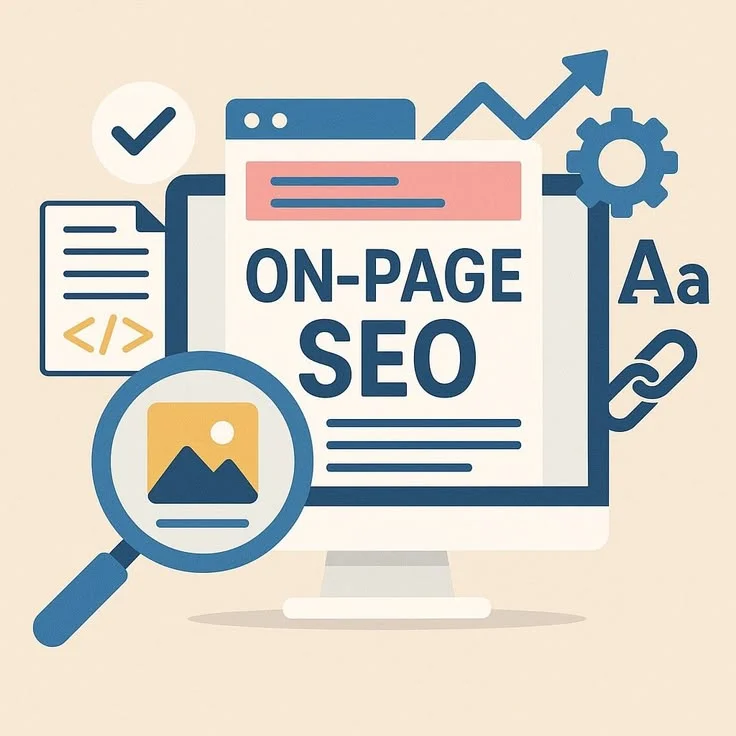
On-page SEO focuses on optimizing individual pages and their content.
Important elements include:
- Page titles
- Headings
- Keywords
- Content
- Meta descriptions
- URLs
- Internal links
- Images
- Search intent
- Content structure
For example, if we create a page targeting “SEO services in Kenya,” the page should clearly explain the services offered, who they are for, what they include, and how potential customers can take the next step.
Keywords should be used naturally. The objective is to create a useful page, not to repeat the same phrase unnecessarily.
Technical SEO
Technical SEO focuses on the technical foundation of a website.
It helps search engines access, crawl, understand, and process website content.
Technical SEO can include:
- Website speed
- Mobile usability
- HTTPS security
- XML sitemaps
- Robots.txt
- Canonical URLs
- Structured data
- Crawlability
- Indexability
- Broken links
- Redirects
- Core Web Vitals
- Website architecture
Technical SEO is important because even excellent content can have problems if search engines cannot properly access or understand the website.
Off-Page SEO

Off-page SEO focuses on signals and activities outside our website that can contribute to its authority and reputation.
One of the most recognized elements of off-page SEO is link building.
A backlink is a link from another website to our website.
For example, if a respected industry website references one of our guides and links to it as a useful resource, that link can contribute to our website’s authority.
However, more backlinks do not automatically mean better SEO.
We should focus on relevant, trustworthy, and naturally earned links rather than collecting large numbers of low-quality links.
Local SEO

Local SEO helps businesses become more visible when people search for products or services in a specific location.
Local SEO can be particularly valuable for:
- Restaurants
- Hotels
- Clinics
- Dental practices
- Gyms
- Law firms
- Real estate companies
- Schools
- Salons
- Construction companies
- Local service businesses
For example, a Nairobi restaurant may want to appear for searches such as:
“restaurants in Nairobi”
or
“restaurant near me.”
A local SEO strategy can include:
- Optimizing a Google Business Profile
- Keeping business information accurate
- Creating relevant location pages
- Building local citations
- Earning genuine customer reviews
- Creating useful local content
- Earning relevant local links
What Are SEO Keywords?
SEO keywords are words and phrases people use in search engines to find information, products, services, or solutions.
Examples include:
- “digital marketing agency Kenya”
- “SEO services Nairobi”
- “website design Kenya”
- “best gym in Nairobi”
- “Google Ads agency”
- “how to improve SEO”
Keyword research helps us understand what our target audience searches for.
However, good keyword research is not simply about finding keywords with the highest search volume.
We should also consider:
- Relevance
- Search intent
- Competition
- Business value
- Location
- Conversion potential
- User needs
A keyword with fewer searches may sometimes be more valuable if the people searching for it are highly likely to become customers.
What Is Search Intent?
Search intent is the reason behind a user’s search.
Understanding search intent helps us create content that matches what people actually want.
There are several common types of search intent.
Informational Search Intent
The user wants to learn something.
Example:
“What is SEO?”
Navigational Search Intent
The user wants to find a specific website or brand.
Example:
“Google Search Console.”
Commercial Search Intent
The user is researching options before making a decision.
Example:
“Best SEO agencies in Kenya.”
Transactional Search Intent
The user is ready to take an action.
Example:
“Hire SEO agency Nairobi.”
Matching our content to search intent makes the content more useful and relevant.
What Makes a Website SEO-Friendly?
An SEO-friendly website allows users to navigate easily while providing search engines with clear information about its pages and structure.
Important characteristics include:
- Clear navigation
- Logical website structure
- Fast loading performance
- Mobile-friendly design
- Secure HTTPS
- Descriptive URLs
- Helpful content
- Proper heading structure
- Optimized images
- Internal links
- Clear calls to action
For example, a business website might use a structure such as:
Home → About → Services → Blog → Contact
Individual service pages can then provide detailed information about each service.
This structure helps visitors find what they need and helps search engines understand the relationship between different pages.
How Long Does SEO Take to Work?
SEO usually requires consistent effort over time.
There is no universal timeframe because results depend on factors such as:
- Website authority
- Competition
- Industry
- Target keywords
- Content quality
- Technical condition
- Backlink profile
- Location
- Website history
- Consistency of SEO work
A new website competing for highly competitive keywords may require significantly more effort than an established website targeting less competitive searches.
Instead of measuring SEO only through rankings, we can monitor:
- Organic traffic
- Search impressions
- Click-through rate
- Keyword visibility
- Leads
- Conversions
- Indexed pages
- Backlinks
- Local search visibility
Common SEO Mistakes Beginners Should Avoid
Keyword Stuffing
Keyword stuffing means using a keyword excessively or unnaturally.
Instead, we should use relevant terms naturally and focus on helping the reader.
Creating Low-Quality Content
Publishing large amounts of shallow content does not automatically create a strong SEO strategy.
Each page should have a clear purpose and provide genuine value.
Ignoring Search Intent
A page can target the correct keyword but still fail to satisfy the user if it does not answer their actual question.
Ignoring Technical SEO
Poor website accessibility, broken links, indexing problems, or technical issues can limit search visibility.
Buying Low-Quality Backlinks
Manipulative or irrelevant link-building practices can create SEO risks.
Ignoring Mobile Users
Websites should provide a good experience across smartphones, tablets, and computers.
How to Start SEO as a Beginner
We can start SEO using a straightforward process.
Step 1: Define the Target Audience
Identify who we want to reach.
Understand their:
- Problems
- Questions
- Needs
- Search behavior
- Location
- Buying journey
Step 2: Conduct Keyword Research
Find relevant phrases that our target audience uses when searching.
Step 3: Analyze Search Intent
Determine what users actually want when they search each keyword.
Step 4: Create Helpful Content
Develop pages and articles that answer real questions and provide useful information.
Step 5: Optimize Website Pages
Improve:
- Titles
- Headings
- URLs
- Content
- Images
- Internal links
- Metadata
Step 6: Improve Technical SEO
Check:
- Website speed
- Mobile usability
- Indexing
- Crawlability
- Security
- Broken links
- Website structure
Step 7: Build Authority
Earn relevant backlinks, mentions, citations, partnerships, and industry references.
Step 8: Measure Performance
Use SEO analytics tools to understand what is working and where improvements are needed.
Step 9: Keep Improving
SEO is an ongoing process. We should regularly review performance, update content, improve technical issues, and respond to changes in user behavior.
Best SEO Tools for Beginners
Several tools can help us research and measure SEO.
Google Search Console
Google Search Console helps us monitor search performance, indexing, search queries, impressions, clicks, and technical issues.
Google Analytics
Google Analytics helps us understand website traffic and user behavior.
Google Keyword Planner
Google Keyword Planner can help us discover keyword ideas and research search demand.
Google Trends
Google Trends helps us understand how search interest changes over time.
Screaming Frog
Screaming Frog can help us identify technical SEO issues across a website.
Ahrefs
Ahrefs provides tools for keyword research, competitor research, backlinks, and content analysis.
Semrush
SEO vs. Paid Advertising
SEO and paid advertising are two different ways of generating online visibility.
SEO focuses on earning visibility through organic search results.
Paid advertising involves paying an advertising platform to display advertisements to selected audiences or for particular searches.
SEO can support long-term organic visibility, while paid advertising can provide faster visibility when campaigns are properly managed.
For many businesses, combining both strategies can be useful.
For example, we can use paid advertising to generate immediate traffic while developing SEO to build organic visibility over the longer term.
Is SEO Still Important With AI Search?
Yes. SEO remains important as search experiences continue to evolve with artificial intelligence.
Search engines and AI-powered systems still need to discover, interpret, and understand information published online.
This makes it increasingly important to create content that is:
- Helpful
- Accurate
- Relevant
- Well structured
- Easy to understand
- Trustworthy
- Accessible
- Written for real users
Instead of creating content only to target keywords, we should build comprehensive resources that genuinely answer the questions people have.
The Future of SEO
Search is continuously evolving.
Search engines are becoming better at understanding language, context, entities, relationships, and user intent. Artificial intelligence is also changing how people discover and consume information.
For businesses, this means SEO should not be treated as simply adding keywords to blog posts.
Modern SEO requires a broader approach that combines:
Helpful content + technical quality + search intent + user experience + authority + strong website structure.
Businesses should also look beyond rankings.
A successful search strategy should help move people through the complete customer journey:
Search → Website Visit → Engagement → Lead → Customer → Long-Term Relationship
Key SEO Takeaways
Here are the most important lessons for beginners:
- SEO means Search Engine Optimization.
- SEO helps websites become more visible in organic search results.
- Search engines discover, process, and rank web pages.
- Keyword research helps us understand what people search for.
- Search intent helps us create content that matches user needs.
- On-page, technical, off-page, and local SEO are important areas.
- Helpful content is more valuable than unnecessary keyword repetition.
- Technical website health supports search visibility.
- SEO requires continuous measurement and improvement.
- SEO should ultimately support business goals such as traffic, leads, sales, and growth.
Frequently Asked Questions About SEO
What Does SEO Stand For?
SEO stands for Search Engine Optimization. It is the process of improving a website and its content to increase visibility in organic search engine results.
How Does SEO Work?
SEO helps search engines discover, understand, index, and evaluate website content. Search engines then determine which pages are relevant to particular search queries.
Why Is SEO Important for Businesses?
SEO can help businesses increase organic visibility, attract relevant visitors, generate leads, reach potential customers, and build long-term online presence.
What Are the Main Types of SEO?
The main areas include on-page SEO, technical SEO, off-page SEO, and local SEO. Each area addresses a different part of website visibility and optimization.
What Is an SEO Keyword?
An SEO keyword is a word or phrase people use in a search engine when looking for information, products, services, or solutions.
What Is Search Intent in SEO?
Search intent is the reason behind a user’s search. Understanding it helps us create content that answers the user’s actual needs.
How Long Does SEO Take to Work?
SEO results vary from website to website. Competition, website authority, content quality, technical performance, target keywords, and consistency can all affect how quickly results develop.
Can Beginners Learn SEO?
Yes. Beginners can learn SEO by studying keyword research, search intent, content optimization, technical SEO, internal linking, backlinks, local SEO, and analytics.
Is SEO Better Than Google Ads?
Neither is automatically better. SEO focuses on organic visibility, while Google Ads provides paid visibility. Businesses can use both depending on their goals and resources.
Is SEO Still Important With AI Search?
Yes. Websites still need to provide useful, relevant, accessible, and well-structured information that search engines and AI-powered systems can understand.
Conclusion
SEO is more than ranking higher on Google. It is about helping the right people discover your business when they are searching for the products, services, or information you provide. A strong SEO strategy combines keyword research, valuable content, technical optimization, local SEO, internal linking, website performance, and continuous improvement.
At OpenKey Partners, we help businesses turn search visibility into real business opportunities. Our SEO services are designed to improve your website’s visibility, attract relevant traffic, generate quality leads, and support long-term growth.
From SEO audits and keyword research to on-page SEO, technical SEO, local SEO, content optimization, and ongoing performance monitoring, we can help build an SEO strategy around your business goals.
If your website is not getting the visibility or traffic it deserves, we can help you identify the opportunities, fix the SEO issues, and build a strategy that puts your business in front of the people searching for what you offer.
Ready to grow your online visibility? Contact OpenKey Partners today and let’s build an SEO strategy that helps your business get found, get noticed, and grow.